
“`html
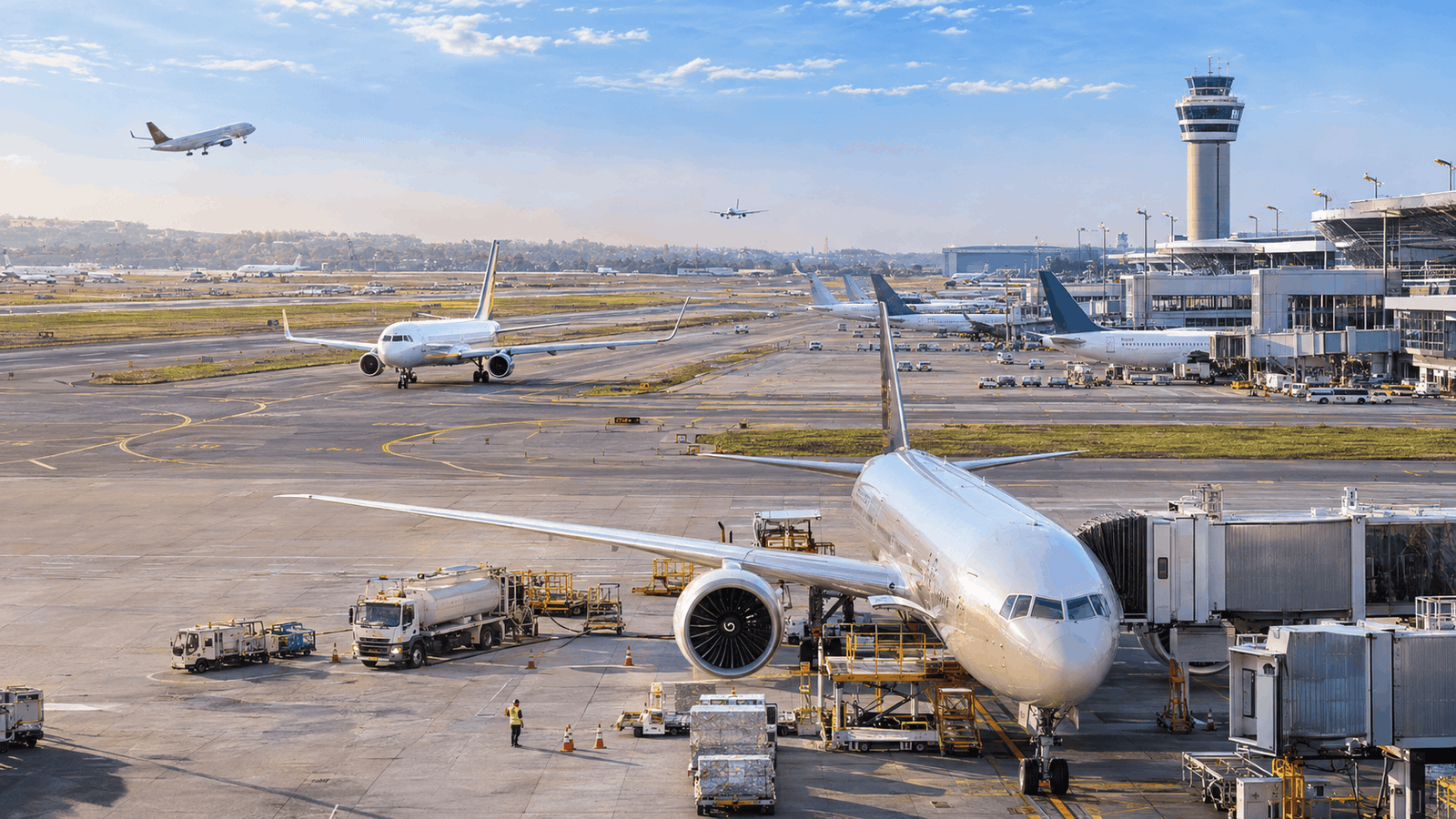
Every day, major international airports handle hundreds or even thousands of aircraft movements. While passengers see airplanes taking off, landing, and moving between terminals, an enormous amount of coordination happens behind the scenes.
Each flight requires a runway, a suitable parking position, ground handling services, passenger processing, and coordination with air traffic controllers. At the same time, airports must respond to changing weather conditions, delayed arrivals, mechanical problems, and unexpected disruptions.
So, how do airports manage hundreds of flights every day without turning the entire operation into chaos?
The answer involves careful scheduling, specialized teams, sophisticated technology, and constant communication between airlines, airport operators, and aviation authorities.
Airport Operations Begin Long Before an Aircraft Arrives
Managing a busy airport is not simply about directing airplanes. Much of the planning begins months before a flight takes place.
Airlines develop flight schedules based on passenger demand, aircraft availability, route networks, and operating restrictions. Airports and relevant coordinators then work to ensure that the planned operations can be accommodated.
How Are Airport Flight Schedules Created?
At particularly busy airports, airlines may need allocated arrival and departure slots. These slots help coordinate demand with the airport’s available capacity.
Airport capacity depends on several factors, including:
- The number and configuration of available runways.
- The capacity of passenger terminals.
- The availability of aircraft parking stands and boarding gates.
- Air traffic control and surrounding airspace constraints.
- Noise restrictions and permitted operating hours.
- Weather conditions and operational safety requirements.
A flight schedule must account for these limitations rather than simply assigning every airline its preferred departure time.
It is also important to distinguish an airport slot from an air traffic control clearance. A scheduled slot does not guarantee that an aircraft can take off at that exact moment.
Why Are Flights Scheduled So Close Together?
Airports are designed to handle multiple operations within relatively short periods. Depending on runway configuration and traffic conditions, one aircraft may land while another is preparing to depart.
Some airports also experience predictable traffic peaks because airlines schedule connecting flights in groups. This allows passengers to transfer between arriving and departing aircraft more efficiently.
However, maintaining such schedules requires precise coordination because a delay in one part of the operation can affect several other flights.
Air Traffic Control Keeps Aircraft Moving Safely
Air traffic control, commonly called ATC, is one of the most important systems involved in managing airport traffic.
Air traffic controllers coordinate aircraft movements and provide instructions designed to maintain safe separation between airplanes.
At major airports, different controllers handle different responsibilities rather than having one person manage every aircraft.
What Does the Airport Control Tower Do?
The control tower oversees important aircraft movements on and around the airport.
Depending on the airport, controller responsibilities may include:
- Ground control: Managing aircraft movement along taxiways and designated airport movement areas.
- Local or tower control: Coordinating runway operations, including takeoff and landing clearances.
- Clearance delivery: Providing departing aircraft with relevant air traffic control clearances.
- Approach and departure control: Managing aircraft arriving in or departing from nearby controlled airspace, often from a separate control facility.
These responsibilities are coordinated through established procedures and communication systems.
For example, a departing aircraft may first receive its route clearance, then taxi instructions, and finally permission to enter the runway and take off.
How Do Airplanes Avoid Collisions Near Airports?
Controllers use surveillance information, established flight procedures, aircraft position reports, and communication with pilots to maintain safe aircraft separation.
Aircraft cannot simply take off whenever a runway appears empty.
Controllers must consider factors such as other aircraft approaching the runway, required separation distances, and wake turbulence produced by larger aircraft.
Aircraft approaching an airport may also be instructed to change speed, adjust their flight path, or enter a holding pattern when necessary.
These procedures help manage traffic safely while maintaining an orderly flow of arrivals and departures.
Runways and Taxiways Work Like a Carefully Managed Road Network
An airport’s runways and taxiways may look like ordinary paved surfaces, but each has a specific function.
Runways are primarily used for aircraft takeoffs and landings, while taxiways allow aircraft to travel between runways, terminals, and other airport facilities.
Busy airports may have multiple runways, although their ability to operate simultaneously depends on runway spacing, layout, weather, and applicable procedures.
How Are Runways Assigned to Aircraft?
Runway selection depends heavily on wind conditions, because aircraft generally perform best when taking off and landing into the wind.
Controllers and airport operators must also consider runway availability, traffic demand, aircraft performance requirements, and operational restrictions.
At some airports, certain runways may be used predominantly for departures while others handle arrivals. These arrangements can change when conditions require.
What Happens When an Aircraft Lands?
After landing, pilots reduce the aircraft’s speed and exit the runway through an appropriate taxiway when it is safe to do so.
Ground controllers then provide instructions for reaching the assigned parking stand or gate.
Aircraft may sometimes need to stop and wait for other traffic before continuing.
This carefully controlled movement helps prevent conflicts between airplanes and allows airport surfaces to be used efficiently.
Airport Ground Crews Prepare Aircraft for Their Next Flight
Once an airplane reaches its parking position, another complex operation begins.
The process of preparing an aircraft after arrival and before its next departure is commonly called an aircraft turnaround.
Several teams work together to complete different tasks, often within a limited time.
What Happens During an Aircraft Turnaround?
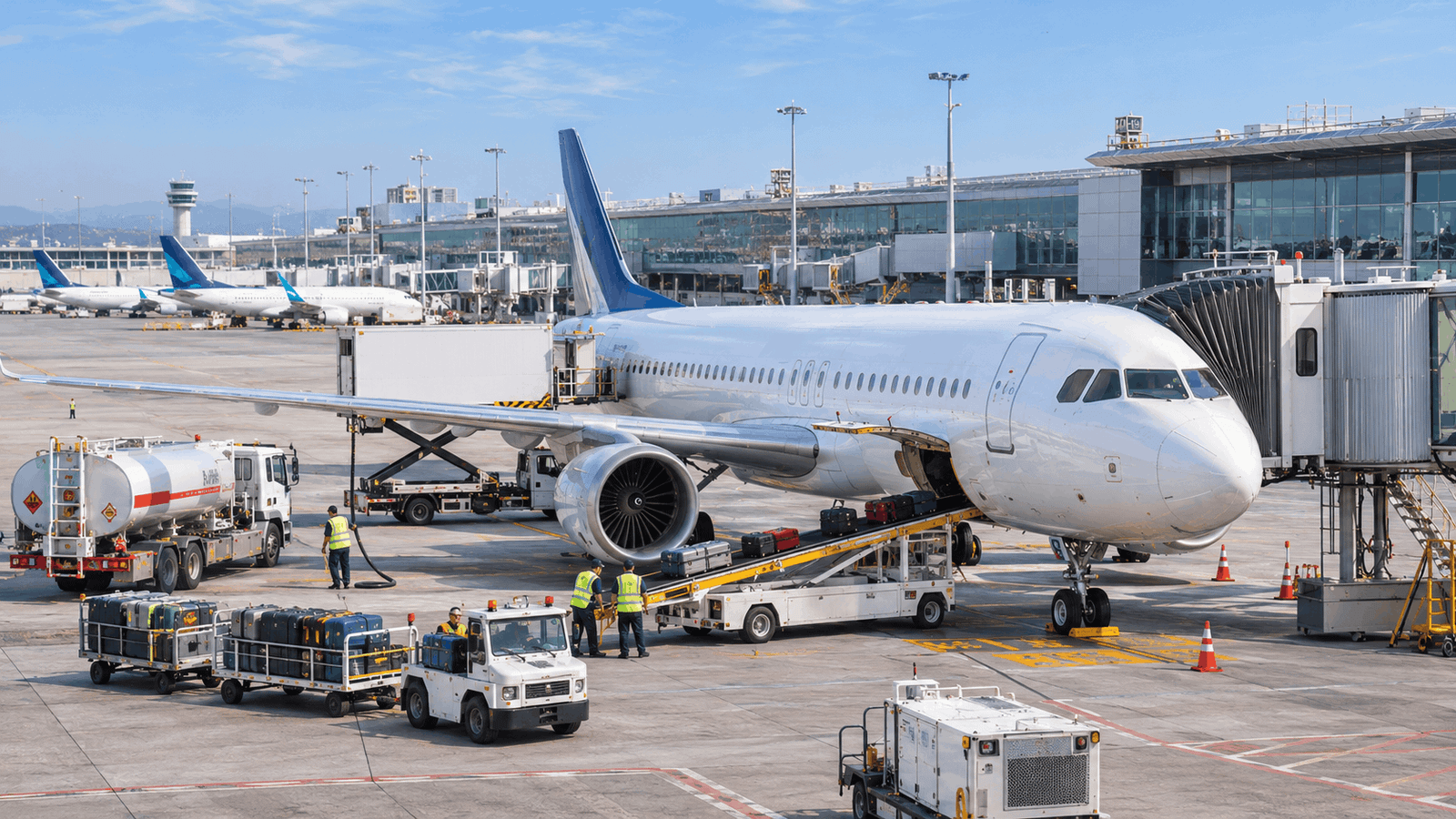
Depending on the aircraft, airline, and type of flight, turnaround activities may include:
- Passenger disembarkation: Arriving passengers leave the aircraft through a boarding bridge or mobile stairs.
- Baggage unloading: Ground handlers remove checked baggage and cargo.
- Aircraft cleaning: Cabin cleaning teams prepare the passenger areas for the next flight.
- Refueling: The aircraft receives the fuel required for its next journey.
- Catering: Food, drinks, and other onboard supplies are replenished when required.
- Technical checks: Flight crews and maintenance personnel perform applicable inspections and checks.
- Baggage loading: Checked luggage and cargo for the departing flight are loaded.
- Passenger boarding: Departing travelers enter the aircraft after the necessary preparations and approvals.
Some tasks can take place simultaneously, but others must follow specific safety procedures or operational sequences.
For example, servicing equipment must be positioned carefully around the aircraft, and certain activities require additional precautions when passengers are onboard.
The turnaround time varies considerably. A short domestic flight operated by a narrow-body aircraft may require substantially less ground time than a long-haul flight using a large wide-body aircraft.
How Airports Coordinate Gates, Baggage, and Passengers
Aircraft are only one part of airport operations. Airports must also manage thousands of passengers and their belongings.
This requires coordination between terminal operations, airlines, baggage handlers, security personnel, and ground transportation services.
How Are Boarding Gates Assigned?
Airports use gate and stand management systems to help allocate available parking positions to arriving and departing aircraft.
Assignments depend on factors such as aircraft size, international or domestic passenger requirements, terminal facilities, airline arrangements, and expected arrival and departure times.
If a flight arrives late, its originally assigned gate may no longer be available.
Airport operations teams may then need to assign another gate or arrange a remote parking position where passengers travel by bus.
How Does Airport Baggage Handling Work?
At many large airports, checked baggage moves through automated conveyor systems that transport luggage between check-in areas, screening equipment, sorting facilities, and aircraft loading locations.
Bag tags and tracking systems help identify the intended destination of each item.
For connecting flights, baggage handlers must transfer luggage to the correct departing aircraft within the available connection time.
Although automation reduces some manual work, baggage handling still depends on operational staff, reliable equipment, and accurate flight information.
Technology Helps Airports Manage Complex Operations
Modern airports rely on specialized computer systems to monitor operations, distribute information, and respond to changes.
These technologies support human decision-making rather than replacing the responsibility of trained aviation professionals.
Airport Operations Databases
Many airports use an Airport Operational Database, commonly known as an AODB, to store and distribute important operational information.
Depending on the system, this may include flight schedules, aircraft movements, gate assignments, and updated arrival or departure information.
Sharing consistent information helps different airport departments coordinate their activities.
Airport Collaborative Decision-Making
Some airports implement Airport Collaborative Decision-Making (A-CDM), an approach that improves coordination between airport operators, airlines, air traffic control, and ground handling companies.
Instead of relying on separate estimates from different organizations, participating teams exchange updated operational information.
For example, if an aircraft needs additional maintenance before departure, the revised readiness estimate can help other teams adjust their plans.
This can improve the predictability of aircraft turnaround activities, departure sequencing, and resource allocation.
Aircraft Tracking and Surface Monitoring
Surveillance technologies help controllers monitor aircraft positions in the air and, where suitable equipment is installed, on airport surfaces.
Some airports use advanced surface surveillance systems that combine information from radar and other sensors.
These systems can help controllers identify potential conflicts involving aircraft or vehicles on runways and taxiways.
However, technology availability and capabilities vary between airports.
What Happens When Flights Are Delayed?
Even with careful planning, airport operations do not always run according to schedule.
Weather changes, aircraft maintenance requirements, air traffic restrictions, and late-arriving aircraft can disrupt normal operations.
How Do Airports Handle Bad Weather?
Heavy rain, thunderstorms, snow, strong winds, and low visibility can affect airport operations.
Depending on the conditions, controllers may need to increase aircraft spacing, restrict certain runway operations, or temporarily stop departures and arrivals.
Airport crews may also need to inspect runways, remove snow, or treat aircraft for ice accumulation.
These safety measures can reduce the number of flights an airport can handle during a particular period.
Why Can One Delayed Flight Affect Other Flights?
Airlines frequently use the same aircraft for several flights throughout the day.
If an aircraft arrives late, the next flight scheduled to use it may also be delayed.
The disruption can spread further if the aircraft, crew, passengers, or gate are needed for another operation.
This is one reason delays sometimes continue even after the original problem has been resolved.
Airlines and airport operations teams respond by adjusting schedules, reassigning available resources, and updating operational information.
Who Is Responsible for Managing the Entire Airport?
Although passengers often think of an airport as one organization, daily operations involve multiple independent parties.
The airport operator manages infrastructure and coordinates many operational services. Airlines manage their aircraft, crews, and passenger operations. Air traffic control services manage the movement of aircraft within their assigned areas of responsibility.
Ground handling companies, security agencies, emergency responders, and other service providers also perform essential tasks.
At many large airports, an operations control center brings together information from different departments to help coordinate the overall airport operation.
During disruptions, these teams communicate to determine which resources are available and how operations can continue safely.
General Curiosity
Can Two Airplanes Land at the Same Airport at the Same Time?
Yes. Some airports have multiple runways that can support simultaneous landing operations under approved conditions. Whether this is permitted depends on runway configuration, separation requirements, weather, equipment, and air traffic control procedures.
Why Do Airplanes Sometimes Wait Before Taking Off?
An aircraft may wait because another airplane is using the runway, required separation has not been established, weather conditions have changed, or air traffic restrictions are in effect. A delay may also result from an assigned departure time or an operational issue.
Do Airports Operate 24 Hours a Day?
Some major international airports operate around the clock, while others have restricted hours or nighttime noise limitations. Even airports without continuous passenger flights may have maintenance, security, cargo, or other operational activities taking place overnight.
What Happens If an Airport’s Computer Systems Fail?
Airports and aviation service providers maintain contingency procedures for various technology failures. Depending on the affected system, staff may use backup equipment, alternative communication methods, or manual procedures. Operations may also be reduced or suspended until they can continue safely.
Can an Airport Run Out of Parking Space for Airplanes?
Yes. Aircraft parking capacity is limited. When gates and remote stands are occupied, arriving aircraft may have to wait for an available position. During significant disruptions, airlines and airport operators may need to adjust parking assignments, departure plans, or flight schedules.
Conclusion
Airports manage hundreds of flights every day through a combination of advance planning, air traffic control, coordinated ground operations, and specialized technology.
Every arrival and departure depends on many interconnected activities, from runway management and baggage handling to passenger boarding and aircraft maintenance.
What appears to passengers as a simple takeoff or landing is actually the result of continuous coordination between multiple professional teams.
Although delays and unexpected disruptions are sometimes unavoidable, established aviation procedures and effective communication help airports maintain safe and organized operations throughout the day.
“`