
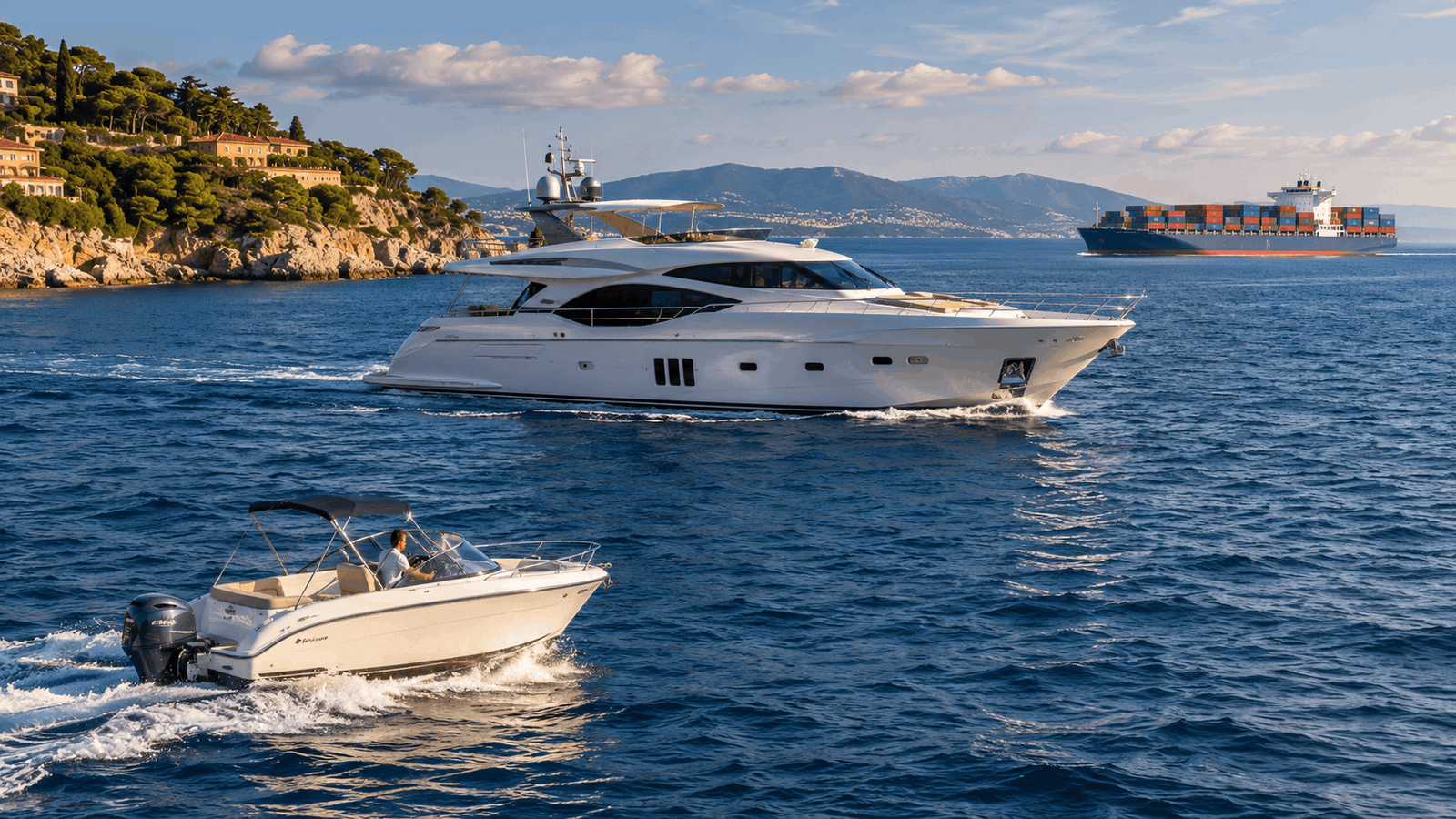
Have you ever looked at a beautiful vessel floating in the ocean and wondered whether it was a yacht, a boat, or a ship? These three terms are often used interchangeably, but they do not always describe the same thing.
At first glance, the difference might seem obvious. Boats are small, yachts are luxurious, and ships are enormous. However, the reality is more interesting. A yacht can be larger than some ships, a boat can cross an ocean, and not every yacht is designed for luxury.
Understanding the difference between a yacht, boat, and ship involves more than simply comparing their sizes. Their intended purpose, construction, equipment, and operating requirements also play important roles.
In this guide, we will explore what makes each type of vessel unique, how they compare, and why certain watercraft are classified differently despite looking similar.
What Is a Boat?
A boat is a watercraft designed to travel on water. It can be powered by an engine, sails, paddles, or oars.
Boats come in many shapes and sizes. Some are small enough for a single person, while others can accommodate numerous passengers and travel considerable distances.
The word “boat” is commonly used for smaller vessels, particularly those operating on lakes, rivers, coastal waters, and other relatively sheltered environments. However, there is no universally accepted size at which a boat automatically becomes a ship.
Common Types of Boats
Different boats are designed for different activities. Some popular examples include:
- Fishing boats: Designed for catching fish in rivers, lakes, coastal waters, or offshore environments.
- Speedboats: Motor-powered boats built for relatively fast travel and recreational activities.
- Pontoon boats: Recreational boats featuring a broad deck supported by pontoons, commonly used for relaxing and entertaining.
- Rowboats: Small boats propelled manually using oars.
- Sailboats: Vessels that primarily use wind power for movement.
- Kayaks: Narrow, lightweight watercraft typically propelled using a double-bladed paddle.
Many recreational boats are relatively easy to operate with appropriate training and are suitable for day trips, fishing, and watersports.
Nevertheless, certain boats are highly specialized. Lifeboats, patrol boats, and offshore fishing boats may require professional operators and advanced safety equipment.
What Is a Yacht?
A yacht is a vessel primarily associated with recreational activities such as cruising, sailing, entertaining, or racing.
Although yachts are frequently connected with wealth and luxury, expensive interiors are not essential to their definition.
Some yachts are designed for competitive sailing, while others provide comfortable accommodation for extended journeys. They can be powered by engines, sails, or a combination of propulsion systems.
One important distinction is that the term “yacht” generally describes a vessel’s recreational purpose rather than establishing a strict size category.
Different Types of Yachts
Yachts can be divided into several broad categories based on their design and intended use.
- Motor yachts: Powered primarily by engines and commonly used for recreational cruising and entertaining.
- Sailing yachts: Rely primarily on wind propulsion and may be designed for cruising or competitive sailing.
- Luxury yachts: Equipped with premium accommodation and amenities that may include spacious cabins, lounges, dining areas, and entertainment facilities.
- Superyachts: Particularly large, high-end yachts that often accommodate professional crews and provide extensive onboard facilities.
- Expedition yachts: Designed for long-distance exploration, sometimes including travel to remote destinations.
The term “superyacht” is commonly associated with yachts measuring approximately 24 meters (79 feet) or more, although definitions vary across organizations and the maritime industry.
Does a Yacht Have to Be Expensive?
Not necessarily.
While luxury yachts can cost substantial amounts of money, smaller recreational sailing yachts and older cruising yachts may be significantly more affordable.
Ownership costs also depend on maintenance, insurance, storage, equipment, fuel, and whether professional crew members are required.
A modest sailing yacht intended for weekend cruising can serve a very different purpose from a large motor yacht designed for extended luxury vacations.
What Is a Ship?
A ship is generally understood to be a large watercraft designed for transporting passengers, carrying cargo, conducting research, supporting military operations, or performing other substantial maritime activities.
Ships typically have greater carrying capacity, more extensive onboard systems, and more complex operating requirements than ordinary recreational boats.
Many ships are designed to operate across oceans and other large bodies of water. They may remain at sea for extended periods and carry specialized equipment, supplies, and professional crews.
However, size alone does not provide a universal distinction between ships and boats. Maritime authorities and organizations may apply different definitions depending on the type of vessel and the regulations involved.
Common Types of Ships
- Cargo ships: Transport goods and merchandise between ports around the world.
- Container ships: Carry standardized shipping containers used in international trade.
- Cruise ships: Transport passengers on recreational voyages while providing accommodation, dining, and entertainment.
- Naval ships: Support military operations, maritime defense, and national security.
- Research ships: Carry scientific equipment and personnel studying oceans, marine ecosystems, and environmental conditions.
- Tankers: Transport liquids or gases, including petroleum products and liquefied natural gas.
Ships play a major role in international commerce, tourism, scientific exploration, and global transportation.
Yacht vs Boat vs Ship: Main Differences
The easiest way to understand these vessels is to compare their typical purposes, sizes, and operating characteristics.
Although there are exceptions, the following table highlights the distinctions most people encounter.
| Feature | Boat | Yacht | Ship |
|---|---|---|---|
| Primary purpose | Recreation, fishing, transportation, or specialized work | Recreation, cruising, sailing, or racing | Commercial transport, military operations, research, or other large-scale activities |
| Typical size | Usually small to medium | Varies from relatively small to extremely large | Generally large |
| Propulsion | Engines, sails, paddles, or oars | Engines or sails | Usually powered by engines or other mechanical propulsion systems |
| Accommodation | Often limited or absent | Frequently includes cabins and living facilities | Depends on the vessel’s intended function |
| Crew | Often operated by an individual or small crew | Owner-operated or professionally crewed | Usually professionally crewed |
| Operating environment | Inland waters, coastal areas, or offshore waters | Coastal waters and open oceans | Coastal waters, major waterways, and oceans |
| Examples | Fishing boat, kayak, pontoon boat | Sailing yacht, motor yacht, superyacht | Container ship, cruise ship, naval ship |
These descriptions represent common usage rather than strict international classification rules.
Is Size the Biggest Difference?
Size is an important consideration, but it is not the only factor separating boats, yachts, and ships.
People sometimes assume that a vessel becomes a yacht or ship after reaching a particular length. In reality, no single measurement determines the terminology in every situation.
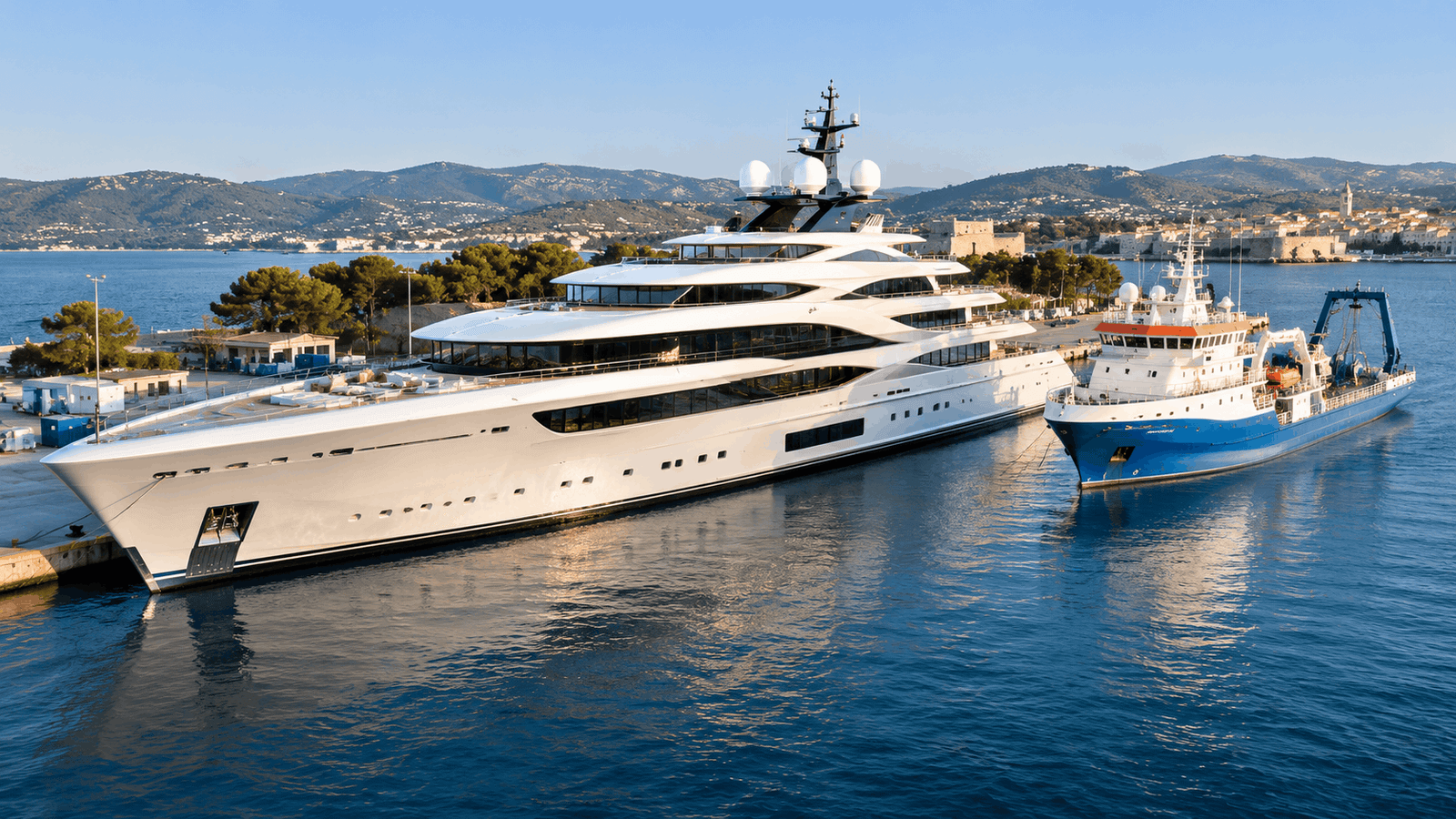
For example, a large luxury yacht may be longer than a small commercial ship. Similarly, certain military submarines are traditionally called boats despite being substantial vessels.
Maritime classification also considers factors such as a vessel’s construction, intended operations, passenger capacity, and applicable regulations.
Can a Yacht Be Bigger Than a Ship?
Yes. Some exceptionally large superyachts exceed the length of smaller commercial, research, or naval ships.
A vessel does not automatically become a ship simply because it reaches an impressive length.
A large recreational yacht may continue to be described as a yacht, while a smaller commercial vessel may be classified or referred to as a ship.
The distinction depends partly on how the vessel is designed, operated, and classified.
How Are Boats, Yachts, and Ships Designed Differently?
Beyond their appearance, different types of vessels are engineered to perform specific tasks.
Boat Design
Many smaller recreational boats prioritize maneuverability, practical deck layouts, and convenient operation.
A fishing boat may include equipment storage and open working areas, while a pontoon boat might emphasize seating, stability, and space for passengers.
Boat designs vary widely because they serve such a broad range of purposes.
Yacht Design
Yachts often balance performance with comfort and accommodation.
Cruising yachts may include sleeping cabins, bathrooms, kitchens, and spaces for relaxing or entertaining.
Racing yachts, however, frequently prioritize speed, handling, weight reduction, and sailing efficiency over luxurious interiors.
Ship Design
Ships are generally engineered around demanding operational requirements.
Container ships prioritize cargo capacity and efficient transportation, while cruise ships focus on passenger accommodation and onboard services.
Research ships may feature laboratories and specialized equipment. Naval ships incorporate systems appropriate to their assigned missions.
These different priorities influence hull design, propulsion, internal arrangements, and operating procedures.
Can You Travel Across an Ocean in a Boat or Yacht?
Yes. Ocean crossings are not limited to large ships.
Specially designed sailing yachts and other seaworthy recreational vessels can complete long-distance ocean passages.
However, successfully crossing an ocean requires much more than simply having a sufficiently large vessel.
Important considerations include:
- Seaworthiness: The vessel must be suitable for the expected conditions.
- Navigation: Reliable navigation systems and route planning are essential.
- Weather: Operators must understand marine forecasts and changing sea conditions.
- Supplies: Adequate food, drinking water, fuel, and other provisions must be available.
- Safety equipment: Appropriate emergency communication devices and lifesaving equipment are necessary.
- Experience: Offshore passages demand suitable training, preparation, and practical seamanship.
A boat designed for calm lakes should not be assumed suitable for offshore travel merely because another vessel of similar length has crossed an ocean.
Why Does the Difference Matter?
Understanding maritime terminology is useful for more than general knowledge.
The distinction becomes particularly important when renting, purchasing, operating, or insuring a vessel.
For example, someone planning a relaxing afternoon on a lake might prefer a pontoon boat. A family interested in overnight coastal cruising might choose a cabin cruiser or sailing yacht.
Meanwhile, transporting large quantities of merchandise internationally requires a completely different type of vessel.
Legal requirements can also differ according to vessel size, registration, use, operating area, and passenger capacity.
Importantly, calling something a yacht rather than a boat does not automatically change its legal classification or exempt it from maritime safety requirements.
General Curiosity
Are All Yachts Considered Boats?
In everyday language, yachts are commonly considered a type of recreational boat or vessel. However, very large yachts may be classified differently under particular maritime rules. The terms overlap, and their precise meaning depends on context.
Why Are Submarines Called Boats?
Submarines are traditionally referred to as boats in naval terminology, even when they are extremely large. This naming convention reflects maritime history and established naval usage rather than their modern dimensions.
Can a Yacht Be Used for Business?
Yes. Yachts can be operated commercially, including for charter vacations and recreational excursions. Commercial operation may involve additional licensing, safety, insurance, and crew requirements depending on local regulations.
Is a Cruise Ship the Same as a Luxury Yacht?
No. Although both may provide comfortable accommodation and recreational facilities, cruise ships are generally designed to transport large numbers of paying passengers. Luxury yachts are typically intended for private recreation or smaller-scale charter experiences.
What Does the Word Vessel Mean?
Vessel is a broad maritime term used to describe watercraft. It is particularly common in legal, technical, and regulatory discussions because it can encompass many different types of boats and ships without relying on everyday naming conventions.
Conclusion
The difference between a yacht, boat, and ship becomes easier to understand when you consider what each vessel is designed to accomplish.
A boat is a broad term commonly associated with smaller watercraft used for recreation, transportation, fishing, or specialized activities. A yacht is primarily associated with recreational cruising, sailing, or racing, while a ship is generally a larger vessel designed for substantial maritime operations.
However, these categories are not separated by one universal measurement. Size, design, purpose, and regulatory classification all influence which term is appropriate.
The next time you see an impressive vessel on the water, consider how it is used rather than judging it by size alone. That usually provides a much better clue about whether you are looking at a boat, a yacht, or a ship.