
This Isn’t Just Another Graphics Upgrade… It’s a Shift
If you’ve seen DLSS 5 clips floating around, you’ve probably heard one hot take:
“it’s just a face filter.”
That’s not just wrong… it completely misses what’s actually happening.
After seeing real gameplay comparisons across titles like Starfield, Hogwarts Legacy, and Assassin’s Creed Shadows, one thing is clear: DLSS 5 is not tweaking visuals, it’s redefining how games are rendered in real time.
What is DLSS 5?
DLSS 5 is NVIDIA’s latest AI-powered rendering tech that improves how games look without requiring insane raw GPU power.
Here’s the simple version:
- Your GPU renders a base image
- DLSS 5 uses AI to reconstruct lighting, materials, and detail
- The final image looks closer to real life, not just sharper
Unlike older DLSS versions that focused mainly on upscaling resolution, DLSS 5 goes deeper:
👉 It understands what it’s looking at
👉 It treats skin, metal, water, and foliage differently
👉 It enhances how light interacts with everything
This is why people are noticing faces first, but the real magic is happening everywhere.
Key Features and What’s New in DLSS 5
1. Unified AI Model “Big Deal”
One model works across all games. No per-game training needed.
2. Real-Time Material Understanding
It recognizes:
- Skin vs metal vs water
- Light absorption and reflection
- Depth and spatial relationships
3. Full Scene Enhancement “Not Just Characters”
Everything improves:
- Objects
- Lighting
- Background depth
- Shadows
4. Developer Controls
Game studios can tweak:
- Intensity levels
- Specific materials (water, wood, skin)
- Color grading and tone
This means DLSS 5 doesn’t override artistic intent, it enhances it.
5. Works Across All Rendering Types
- Rasterization
- Ray tracing
- Path tracing
DLSS 5 On vs Off: Real Image Breakdown
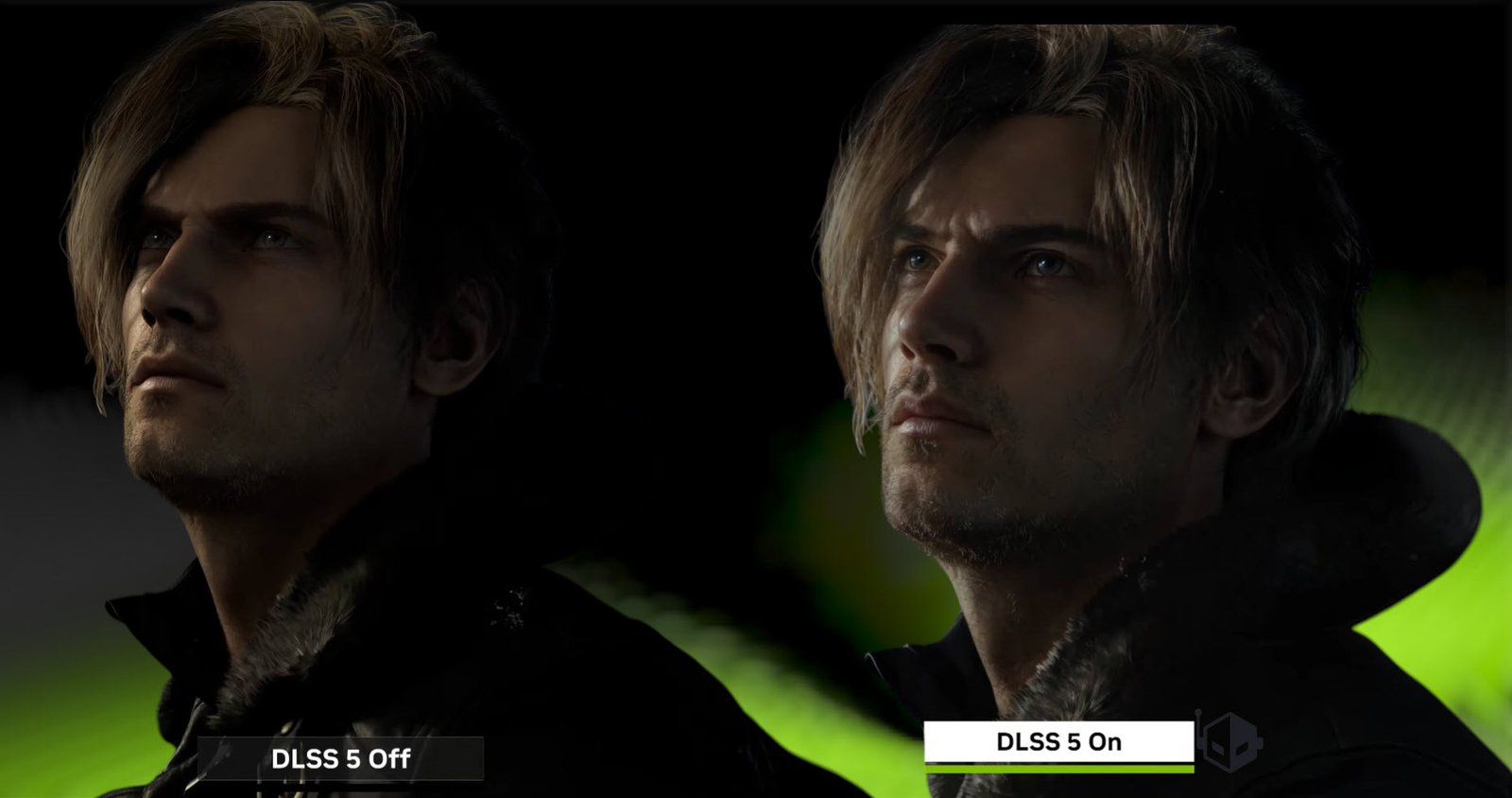
Character Detail Comparison
What changes:
- Skin looks more natural, not plastic
- Wrinkles and micro-details become visible
- Lighting wraps around the face more realistically
👉 This is why people think it’s a “face filter”
👉 But this is just the most noticeable improvement
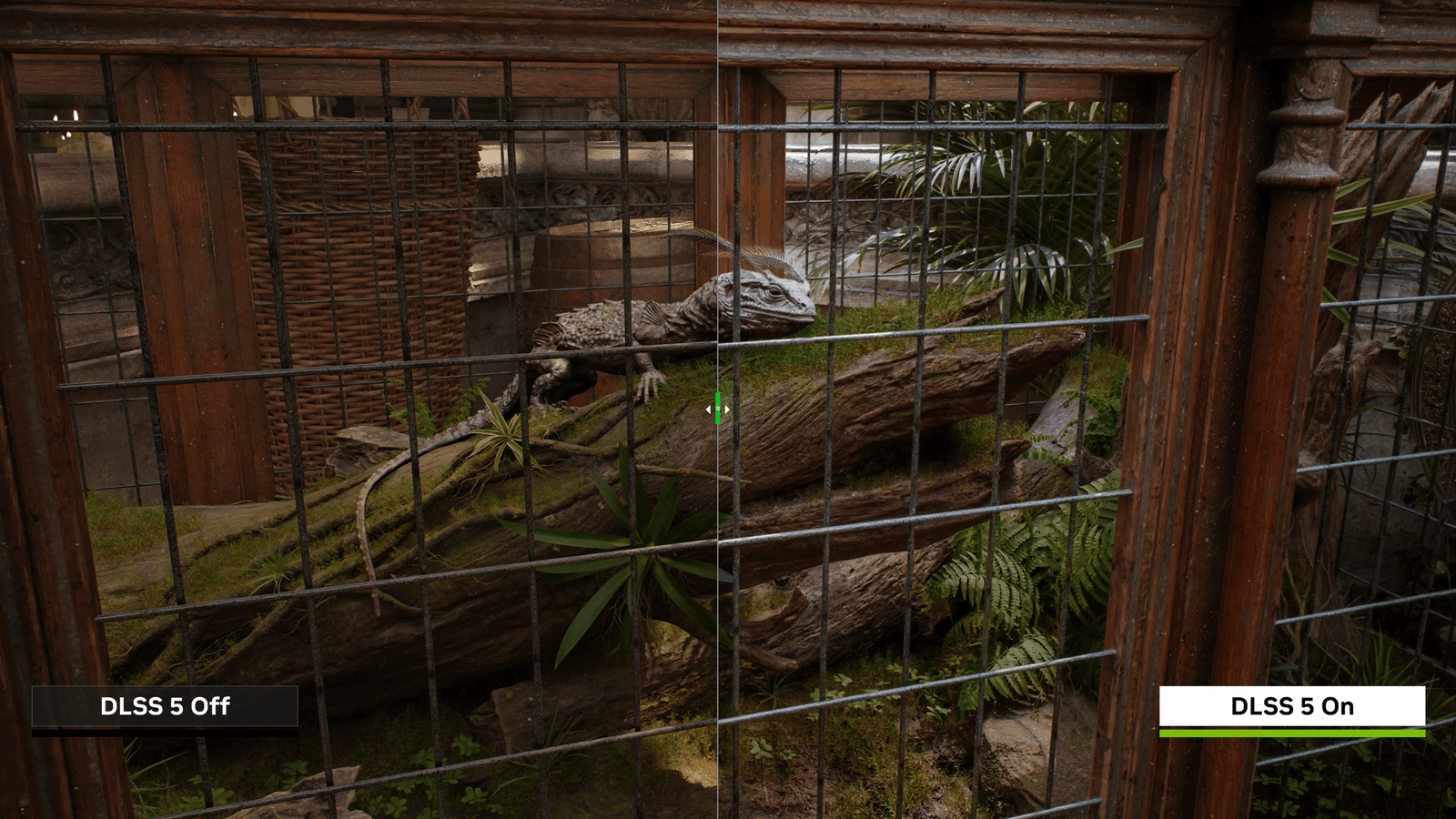
Environmental Depth “The Coffee Machine Effect”
What changes:
- Objects feel grounded in space
- Lighting creates real depth
- Surfaces gain texture and separation
Without DLSS 5:
- Scene looks flat With DLSS 5:
- Scene feels physically believable
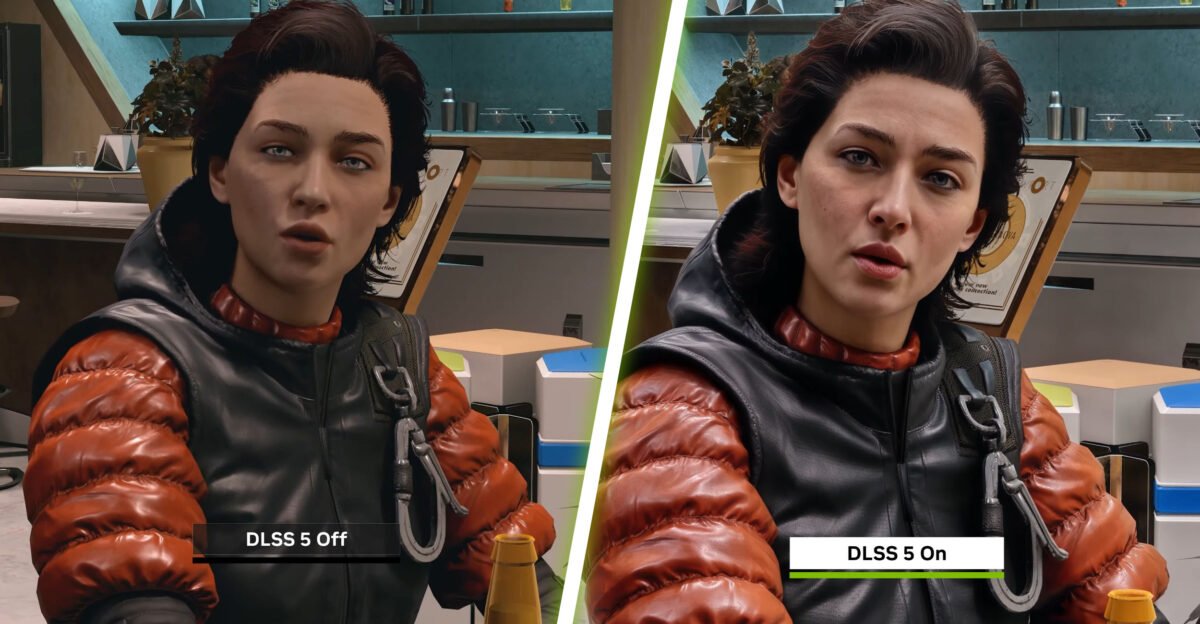
Lighting and Atmosphere “Next-Level Realism”
What changes:
- Light passes through leaves realistically
- Shadows are softer and more natural
- Water and reflections look cinematic
Pros and Cons of DLSS 5
Pros
✔ Massive realism boost without insane performance cost
✔ Works across multiple games automatically
✔ Enhances entire scene, not just resolution
✔ Gives developers fine control
✔ Makes older assets look better
Cons
✖ Requires high-end hardware (early demos used RTX 5090)
✖ Some fear it could alter artistic intent
✖ Early builds still need optimization
✖ “AI-generated look” debate is ongoing
DLSS 5 vs DLSS 3 “Quick Comparison”
| Feature | DLSS 3 | DLSS 5 |
|---|---|---|
| Focus | Upscaling + Frame Gen | Full scene AI enhancement |
| Lighting | Limited | Advanced, realistic |
| Material Awareness | No | Yes |
| Face Detail | Basic | Near photorealistic |
| Developer Control | Moderate | Advanced granular control |
👉 In simple terms:
DLSS 3 improves performance
DLSS 5 improves reality
Real Gamer Opinions and Controversy
DLSS 5 is already dividing the gaming community.
Positive Reactions
- “This is the biggest leap since ray tracing”
- “Games finally look like CGI movies”
- “It fixes the gap between dev vision and real-time limits”
Criticism
- “Feels like AI is taking over art direction”
- “Too clean, almost fake in some scenes”
- “Developers might rely on this instead of optimizing”
Some outlets even called it a threat to traditional game design.
But here’s the reality:
👉 Developers actually want it
👉 It helps them achieve what they originally intended
👉 It doesn’t replace rendering, it enhances it
Is DLSS 5 the Future of Gaming?
DLSS 5 isn’t just another feature you toggle on in settings.
It’s part of a bigger shift:
👉 From traditional rendering → to AI-assisted rendering
👉 From approximating reality → to reconstructing it
Yes, it’s controversial.
Yes, it raises questions about art and authenticity.
But after seeing real comparisons, one thing stands out:
This is the closest games have ever come to true photorealism in real time.
And if this is just version one…
We’re not even close to the ceiling yet.