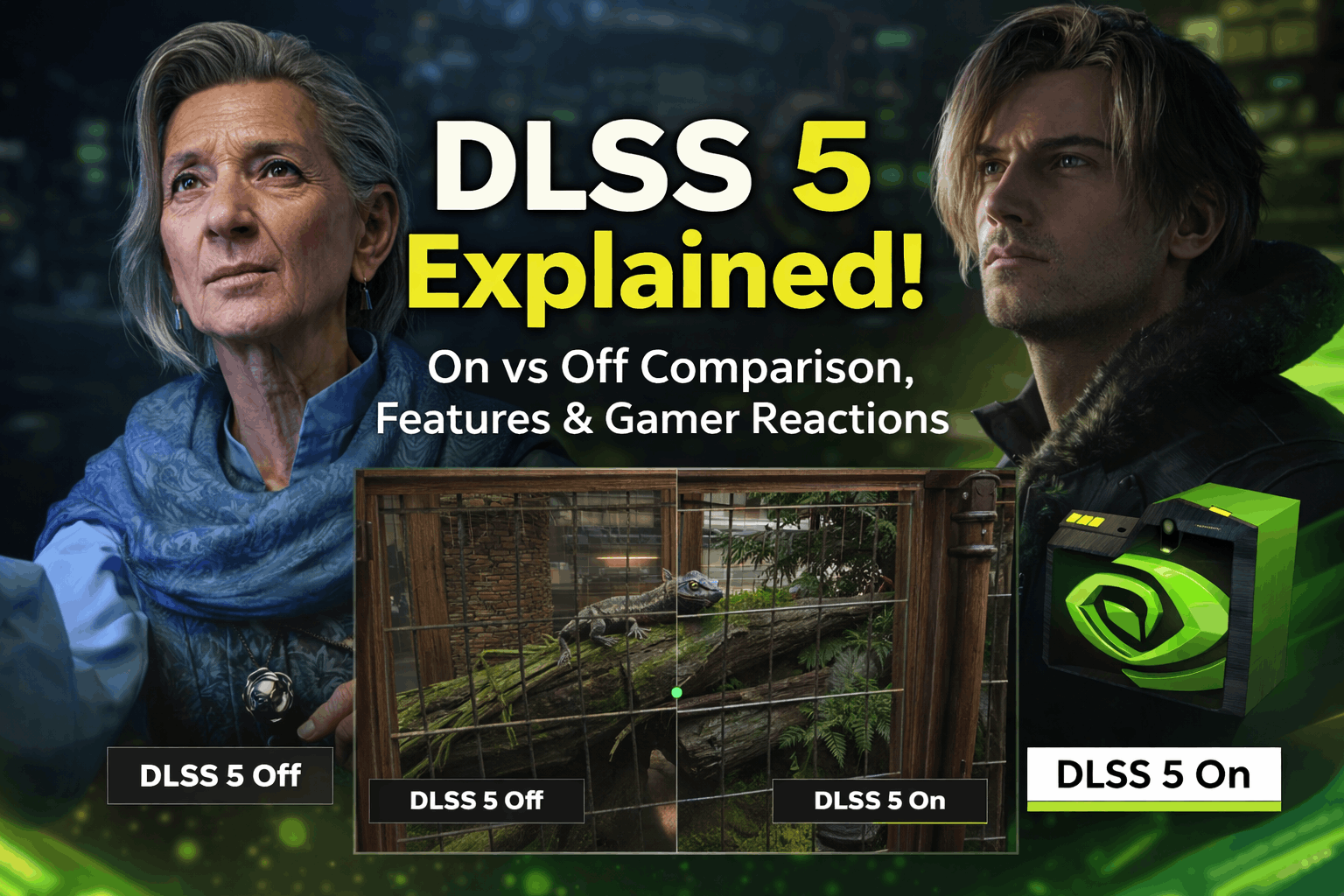
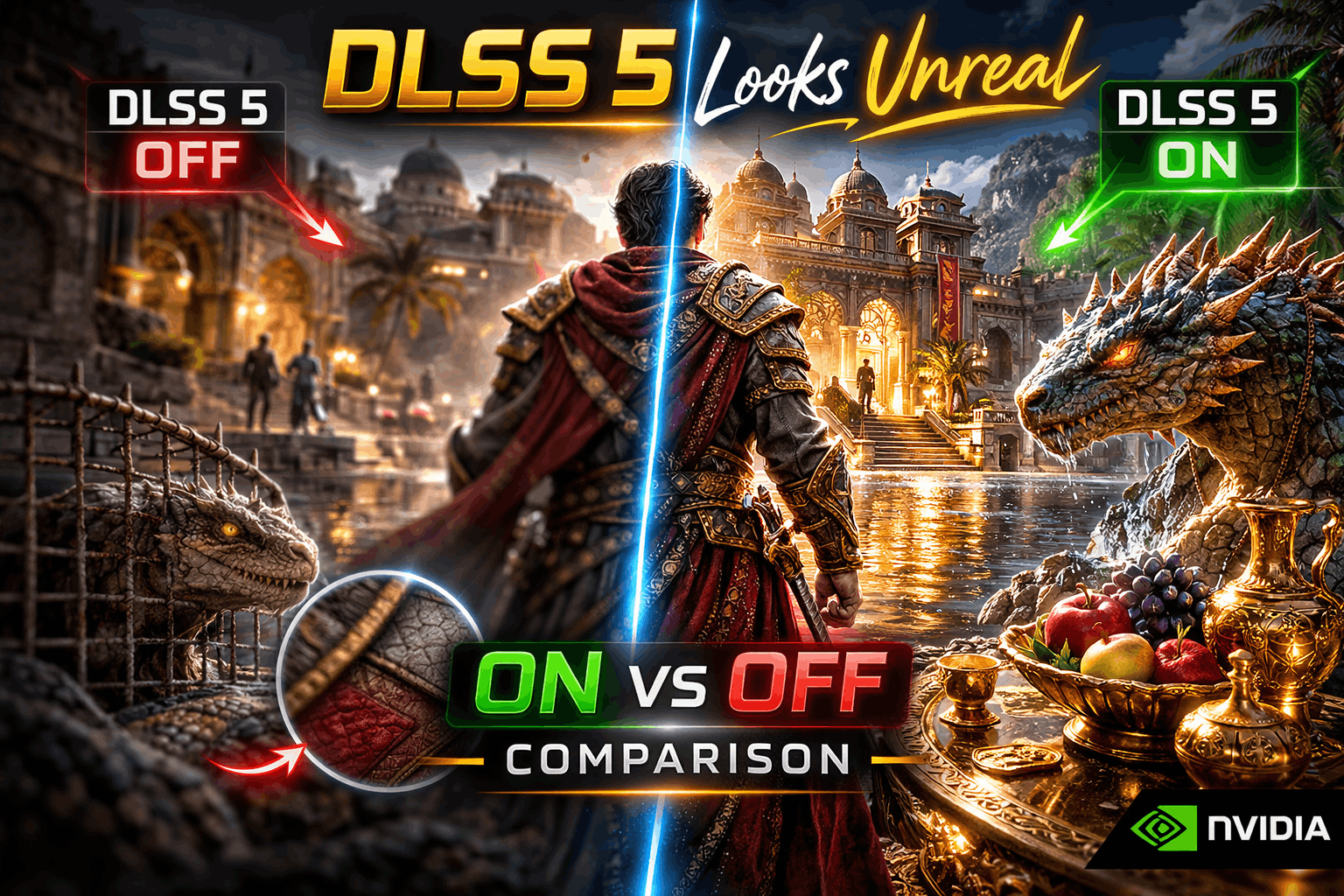
DLSS 5 doesn’t just improve graphics, it challenges what “real” rendering even means.
NVIDIA’s latest reveal, showcased through the cinematic Zorah demo, isn’t just another polished trailer. It’s a direct, side-by-side comparison of DLSS 5 turned on and off in real time and the results are hard to ignore.
In this article, we’ll break down:
- What DLSS 5 actually is
- What the Zorah demo proves
- Visual differences between DLSS 5 On vs Off
- Whether AI rendering is now better than native
What Is DLSS 5?
DLSS (Deep Learning Super Sampling) is NVIDIA’s AI-powered rendering technology that boosts performance while improving image quality.
Instead of rendering every pixel traditionally, DLSS uses AI models trained on massive datasets to reconstruct frames in higher detail.
What’s New in DLSS 5
- More advanced AI reconstruction
- Better texture clarity and edge definition
- Improved stability in motion
- Potential to look better than native rendering
If you want a deeper breakdown of features and real-world comparisons, check this detailed guide:
DLSS 5 Explained: Real Gameplay Comparison, Features, and Gamer Reactions (2026 Guide)
The Zorah Demo: What NVIDIA Actually Showed
Real-Time Rendering, Not Just Cinematic
Unlike pre-rendered trailers, this demo shows consistent improvements across multiple scenes.
That matters because it proves DLSS 5 isn’t just optimized for one perfect shot. It works across different lighting, textures, and environments.
DLSS 5 On vs Off: Visual Breakdown
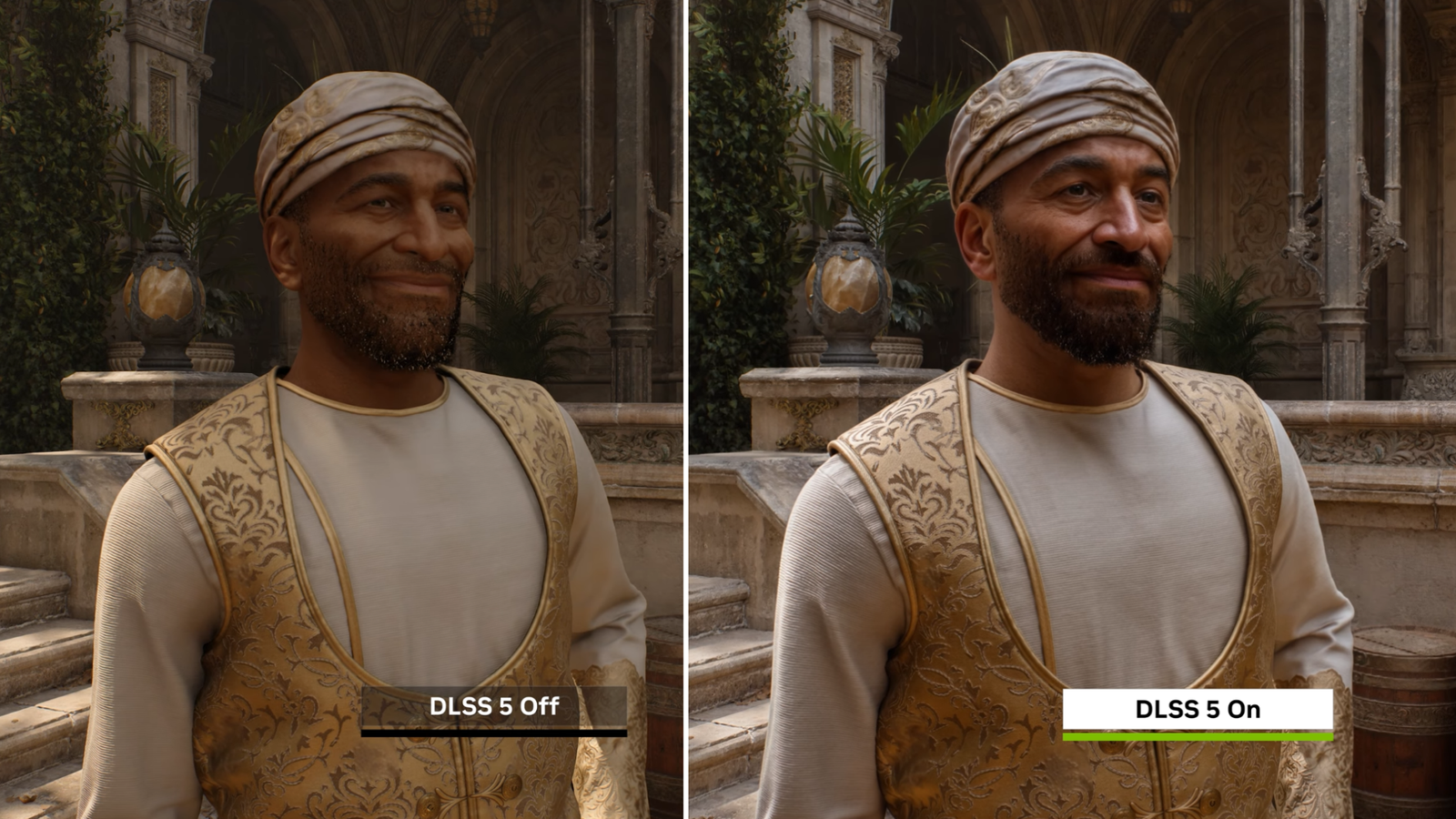
1. Character Detail and Textures
One of the first noticeable improvements is in character clothing.
With DLSS 5 enabled:
- Fabric textures look sharper
- Fine details like stitching and embroidery stand out
- Surfaces feel more “real” instead of slightly blurred
2. Environment and Lighting
The courtyard scene highlights how DLSS 5 handles lighting and depth.
With DLSS 5:
- Shadows appear deeper and more natural
- Edges are cleaner
- Less visual noise in complex areas
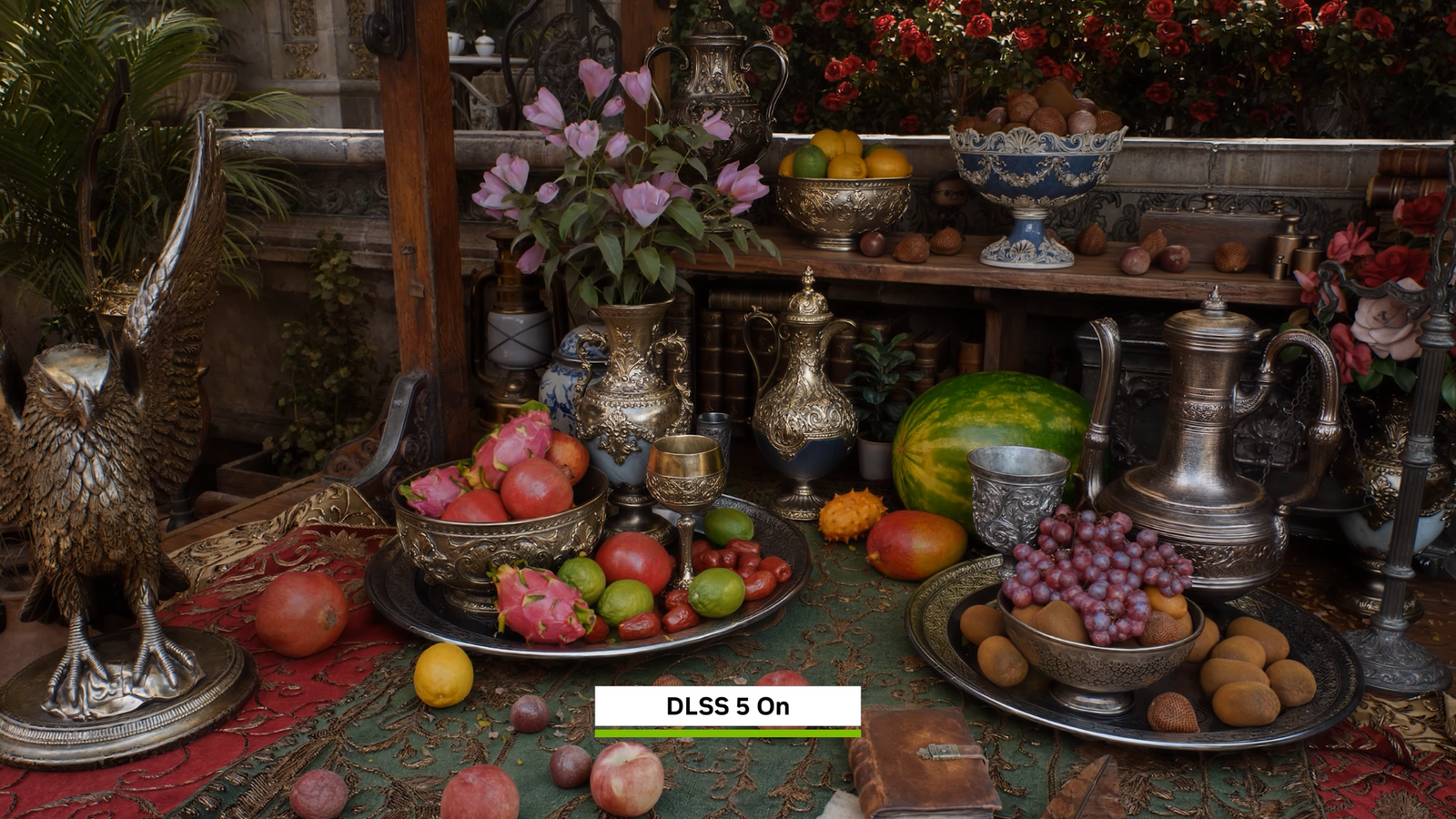
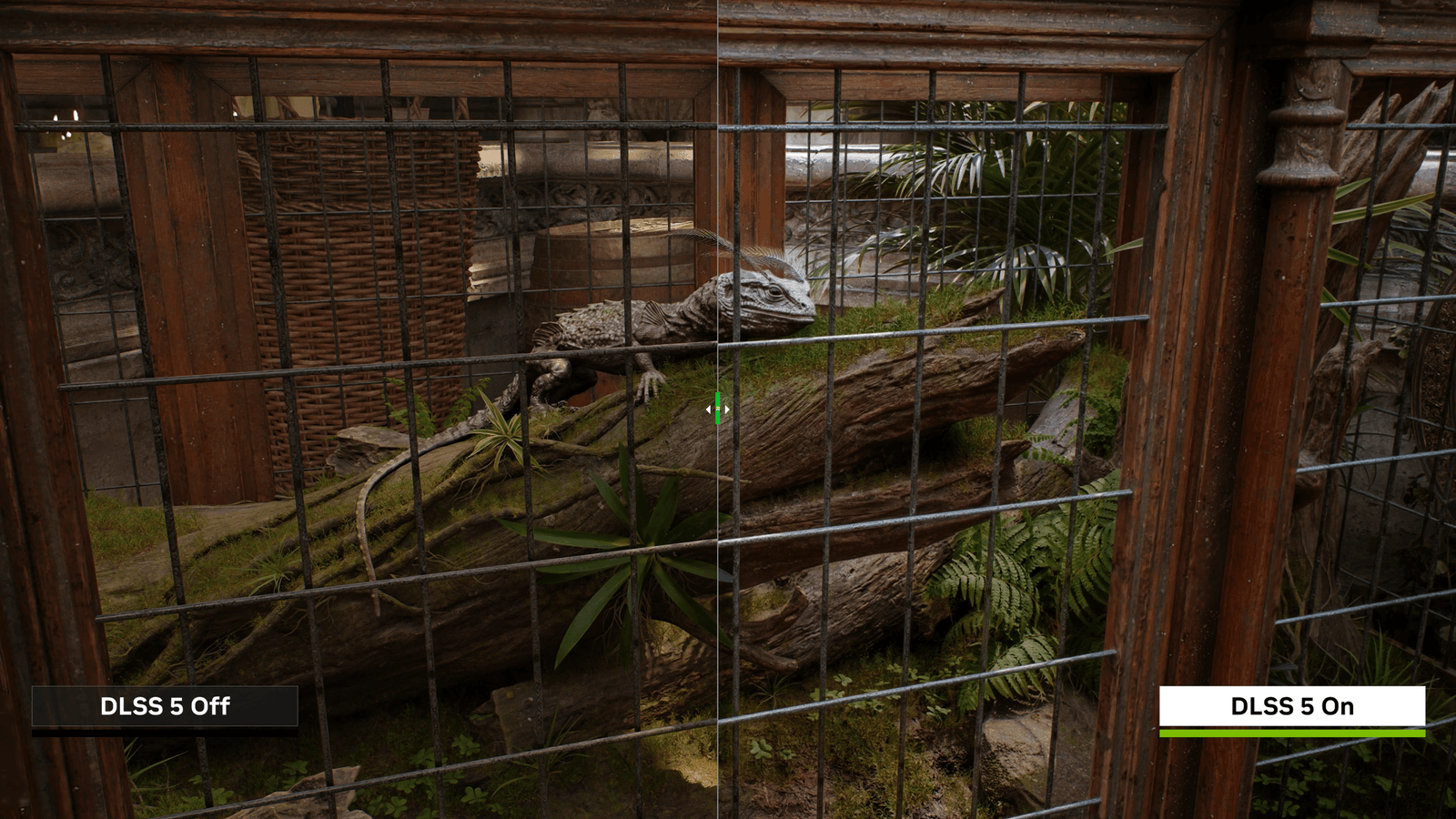
3. Complex Surfaces
This is where DLSS 5 really shows its strength.
The close-up of the lizard creature demonstrates:
- Highly detailed scales
- Improved clarity in the cage mesh
- Better separation between foreground and background
Why DLSS 5 Can Look Better Than Native
This is the biggest shift.
Traditionally, native rendering was the gold standard. But DLSS 5 flips that idea.
Here’s why:
- AI fills in missing detail intelligently
- Reduces aliasing and shimmering
- Stabilizes image quality during motion
- Enhances fine textures beyond raw resolution limits
In simple terms, DLSS 5 isn’t just scaling up resolution, it’s reconstructing a better image.
Performance Impact: More FPS Without Sacrificing Quality
DLSS has always been about performance, and DLSS 5 continues that trend.
What this means for gamers:
- Higher frame rates in demanding games
- Better ray tracing performance
- Ability to play at higher resolutions smoothly
Instead of choosing between performance and quality, DLSS 5 aims to deliver both.
Is This Still “Real Graphics”?
Not everyone is convinced.
The criticism:
- “It’s just AI-generated frames”
- “Not true native rendering”
The reality:
All modern graphics rely on optimization techniques. DLSS is just a more advanced version of that evolution.
Balanced view:
- Yes, it uses AI reconstruction
- But the final output is what matters to players
If it looks better and runs faster, many gamers won’t care how it’s generated.
Pros and Cons of DLSS 5
Pros
- Major visual clarity improvements
- Higher performance
- Better handling of complex scenes
- Reduced noise and aliasing
Cons
- Requires RTX hardware
- Limited game support at launch
- Possible edge-case artifacts
- Ongoing debate about authenticity
What This Means for the Future of Gaming
DLSS 5 signals a major shift in how games are rendered.
Instead of relying purely on raw GPU power:
- AI will play a bigger role
- Developers may optimize differently
- Native resolution may become less important
This could redefine what “next-gen graphics” actually means.
Who Should Care About DLSS 5?
- PC gamers with RTX GPUs
- Players who prioritize visual quality
- Competitive gamers looking for higher FPS
- Tech enthusiasts following AI in gaming
Conclusion
DLSS 5 isn’t just another upgrade. It’s a turning point.
The Zorah demo shows that AI-driven rendering can not only match native quality, but in some cases, surpass it.
The real question now is:
If DLSS 5 looks better and performs better, does native rendering still matter?